
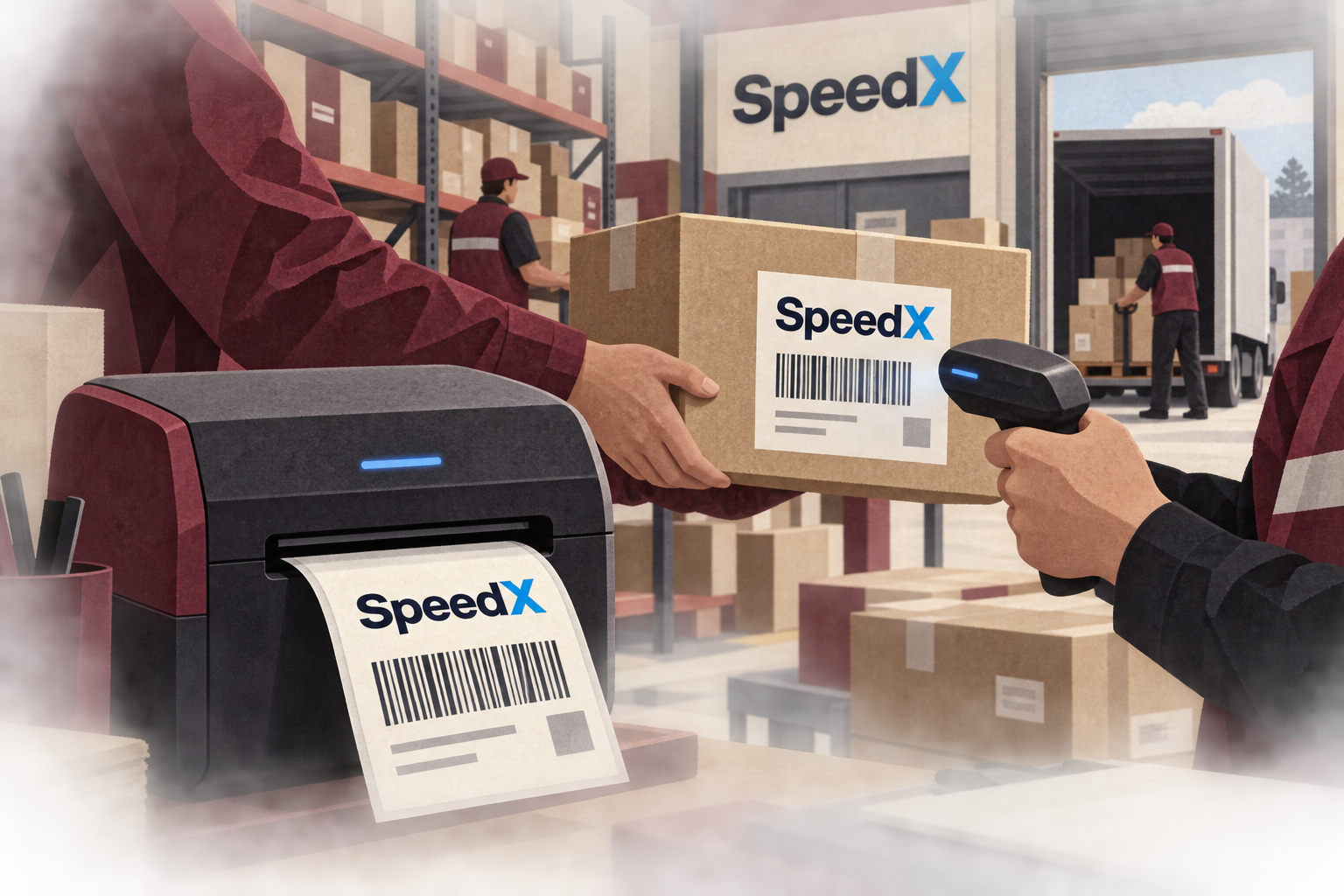
The network: 12,000+ U.S. ZIP codes
SpeedX says it serves more than 12,000 U.S. ZIP codes, with next-day and second-day delivery offerings. That is a carrier-reported footprint, not a transit commitment for every warehouse-to-customer route. Validate the serviceable ZIP file against the orders your warehouse actually ships. SpeedX network and services.
What the 2026 agreement says about shipping prices
The important pricing detail is in Schedule B of SpeedX's March 24, 2026 Parcel Services Agreement: base rates, accessorial prices and the fuel table are supplied at quote time. The template does not provide a universal dollars-per-parcel rate. Weight, dimensions, service and commercial terms matter. SpeedX agreement and Schedule B.
| Cost item | Verified position |
|---|---|
| Base rate | Quote-specific; obtain the lane, weight and service price |
| Fuel | Based on weekly U.S. EIA on-highway diesel through the client's agreed table; no universal public percentage verified |
| Holiday/seasonal fees | Agreement permits seasonal surcharge changes; no public dated 2026 amount/window verified |
| Pickup | Pickup customers need their completed fee/minimum terms; do not treat a template's blank fields as zero |
“No hidden fees” marketing is not a no-fuel promise. Have the rate owner attach the agreed fuel table and a written holiday schedule to the warehouse's carrier setup. Keep the effective dates with them.
Illustrative calculation—not SpeedX rates: If a quote used a $4.80 eligible base and a hypothetical 10% fuel rate, fuel would be $0.48. A separately applicable hypothetical $0.40 peak fee would make the subtotal $5.68, before other charges. This illustration assumes peak is outside the fuel base; use the actual contract's calculation rule. Across 5,000 parcels, those two assumed additions total $4,400.
Coverage and pricing also depend on how the warehouse gets freight into the network. The rest of this checklist follows the parcel from label creation to carrier receipt—the point where a promising rate needs a working process.
Follow the handoff, not just the label. When an order has a tracking number but no clear movement, the first question is where the physical parcel was last accounted for.
SpeedX's customer-support page says that a status showing only “Shipping Label Created” means it has not yet received the shipment for delivery. That makes label creation a different event from carrier receipt. SpeedX tracking and support guidance.
This distinction is useful well beyond one support ticket. It tells a fulfillment team which evidence it needs at each stage of the outbound workflow.
Separate three events in the report
Keep label creation, warehouse dispatch and carrier receipt distinct. Your systems may use different names; ask the integration owner to map them explicitly.
A label is evidence that shipment data was created. A warehouse dispatch record should show what the warehouse says it released. Carrier receipt should be supported by the relevant carrier event or agreed handoff evidence.
Do not have the dashboard rename all three events “shipped” without making the meaning clear to the people using it.
Reconstruct one stalled shipment
Start with the order reference and tracking number. Check the packing record, label creation time, staging location, outbound collection record and the first available carrier event.
If the parcel was assigned to a container, tote or collection batch, retain that association. A batch-level confirmation is useful only if the team can connect the individual parcel to the batch.
Avoid deciding that the carrier lost an item—or that the warehouse failed to dispatch it—before the records establish where the gap occurred.
Use a handoff checklist the shift can finish
| Stage | Record to retain | Question when missing |
|---|---|---|
| Packing complete | Parcel and order reference | Was this order physically ready? |
| Label created | Tracking number and service | Does the label match the parcel? |
| Staged for collection | Location or container association | Where should the team look? |
| Released from warehouse | Collection or dispatch evidence | What left, and when? |
| Carrier event received | Event type and timestamp | Is the integration displaying the event correctly? |
This is a proposed control sequence, not a claim about SpeedX's required internal records. Confirm which events and collection documents your arrangement actually provides.
Give the missing-scan queue an owner
Agree a review threshold with the warehouse and carrier contacts, based on the operating schedule. Do not invent a universal number of hours after which a parcel must be considered lost.
At review time, separate parcels still on the floor from parcels with dispatch evidence but no expected carrier event. Those require different follow-up.
Also test whether a delayed event is present on the carrier's tracking page but absent in the store or WMS. A data-display problem should not automatically become a physical search.
Check the customer-facing message
SpeedX describes label generation and tracking as parts of its delivery workflow. SpeedX service overview. Your store still needs to decide what its own notification means.
If an email says “your order is on its way,” make sure the business understands which event triggered it. An early notification may create avoidable customer questions when physical collection has not happened.
Review the wording and trigger with support, rather than leaving the decision entirely to the shipping integration.
Connect the operating check to cost
Before adding holiday volume, request the applicable rate card and exception terms. We have not established a current public SpeedX fuel or holiday surcharge amount here; no fee estimate should be inferred from this workflow article.
The practical deliverable is a shipment record that both operations and support can explain. A printed label is one part of that record, not its conclusion.
Continue the workflow review
Research note
Official SpeedX pages checked September 23, 2026. The checklist is original operational analysis. We did not inspect live shipment records, conduct a delivery test or determine fault in any customer case.
 Read the previous carrier brief
 Compare complete fulfillment costs